



From concept, material selection, simulation, part fabrication to finished assembly, Composite Components can handle every aspect of your requirements.
We specialise in high-performance structural component manufacture, and this demands the same high performance in our manufacturing techniques, our staff, and our plant and equipment.
Digital design services
3D CAD Modelling

Our 3D computational capability allows us to exploit the benefits of digital processing and modelling to realise an improved product for our clients. We use 3D modelling for concept and part design, FEA analysis, CFD analysis, that can be exported with exceptional accuracy for fabrication.
Parametric/ Algorithic Modelling
We also use generative and parametric algorithms to simplify part design and reduce build times.
Embracing this aspect of digital design, analysis, and construction from the beginning, we have been fostering good relationships with designers and machinists (CAM) alike, to maximise the benefits that computational implementation can create.
FEA and CFD analysis
For structural analysis and optimisation we use Solidworks Composite Simulation FEA for 'ply-by-ply' and 'whole laminate' (or assembly) simulations with optimised topology abilities. This software can be used to critically evaluate a structure prior to manufacture to optimise the part and assembly, exploiting composites' ability to produce weight and performance-critical components for our clients.
As a member of NAFEMS (the International Association for the Engineering Modelling, Analysis and Simulation Community), we maintain rigorous standards in our simulation practices and stay current with industry best practices in finite element analysis and computational engineering.


Pattern-to-Part Manufacturing

Patterns, Tooling and Mould making
Whilst clever and thorough design and engineering is the key to a successful working prototype, accurate and well-made patterns, tools, and moulds, are equally essential to successful construction. Moulds need to be designed and considered to ensure parts can be cured at the required temperatures, can support the part under vacuum, not twist, bend or be affected by thermal expansion to the point where it compromises the final parts.
Our team put as much care into the moulds and associated fixtures while considering the volume of parts and expected outcome in designing a mould system that meets our client’s needs and budget.
We execute this activity with investment in CAD and CAM technologies to ensure premium precision from our machines along with the latest 3D printing and 3D scanning technology.

Prototypes to production parts
Our business extends across initial design, manufacturing, and testing of prototypes to develop the best system for full manufacture.
At times clients need very small volumes, 1 or 2 prototypes to test a product’s viability or a small run of specialist parts.
Other times, clients require prototypes, through to a transition of production parts, each identical. It is here that we excel in utlising digital technologies for the design, cutting of materials, fabrication of moulds, and the trimming of parts on our CNC machines, with the added benefit of 3D scanning to assist in quality control.

Pre-preg carbon fibre and glass fibre
Our primary choice of manufacture is hand lamination of pre-impregnated (pre-preg) fabrics being either carbon, kevlar, glass fibers or a combination thereof using our custom curing ovens or heated hydraulic press to maximize material properties. We also recognize and use other methods such as Resin Transfer Moulding (RTM), vacuum-assisted RTM, and filament winding in the appropriate situations.
With the choice of these manufacturing types, superior parts are produced due to controlled resin/reinforcement ratios, and aesthetic value is increased. We also enjoy the advantage of a cleaner and low toxin/fume-free workplace environment that comes with these advanced practices.

Part and Assembly Testing
At Composite Components we embrace the 'complete picture' and beyond digital analysis can conduct in-house testing & data logging of the ‘built component’. Constant learning informs our process and we keep abreast of the latest practices and test new materials and processes for manufacturing to deliver the most appropriate solution for our clients.
We work with our clients, testing components and assemblies to ensure what is designed and made meets their performance requirements.
Composite Components have multiple test fixtures and data logging equipment for assessing composite material properties and several test rigs for testing composite parts and assemblies in tension, bending, and shear (sometimes simultaneously).
We can also produce custom test rigs to test complex structures eg: flexural testing to destruction (see image) and bending loads applied to the 5 blades of a tidal turbine tested at a 5-ton load.
Composite Components brings decades of composite manufacturing expertise to materials testing services. Our 100 kN Universal Testing Machine (UTM) offers local companies rapid access to world-class testing capabilities here in Western Australia, without the delays and costs of interstate shipping. Our materials testing is conducted by the same experienced composite engineers who design, analyse and manufacture advanced composite structures. This means you receive more than just data—you gain insights from professionals who understand the real-world implications of test results.
Fabrication Facilities
Our 1500sqm premises includes a temperature-controlled clean room for laminating and production of components with over 500 sqm dedicated to the assembly of projects. A suite of machinery including metal fabrication is used for prototyping, mould manufacture, part trimming, and assembly which allows for the full cycle of manufacturing to carried out in-house. When required we also collaborate with other trusted specialists to fill any gaps needed to ensure we can deliver the final product.
Specialist Plant and Equipment
We operate three digitally controlled ovens with data logging capability for curing and post-curing of composite parts, the largest being 5m x 2m x 2m with temperatures ranging up to 180°C and consistent high vacuum pressure.
High production capacity is enhanced by two automated 100-ton heated hydraulic presses: platen sizes: 100cm x 60cm x 25cm and 140cm x 40cm x 25cm, capable of reaching 200 C in 30 minutes for rapid production of composite parts.
Computer Aided Machining (CAM) Capabilities

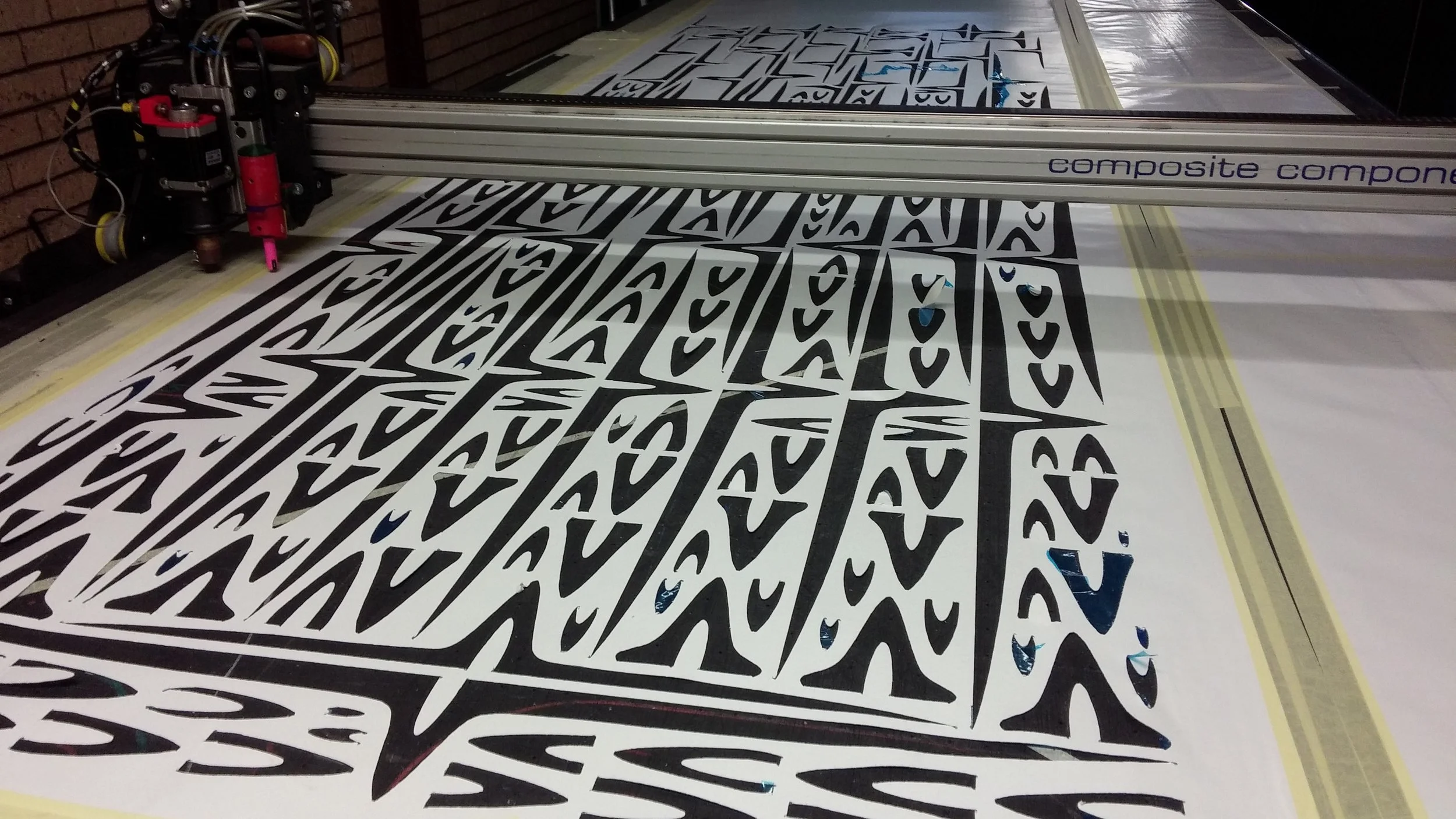
Our CNC cutter/plotter uses 2D cutting files to accurately cut (+/-0.5mm) and identify composite materials on the 6m x 2m bed prior to lamination.
We have three CNC routers with 3 & 4 axis capability and largest with a cutting envelope of 2. 5 x 1.3 x 0.5m, are used for machining moulds and cores, or trimming final parts with precision.
3D Printers
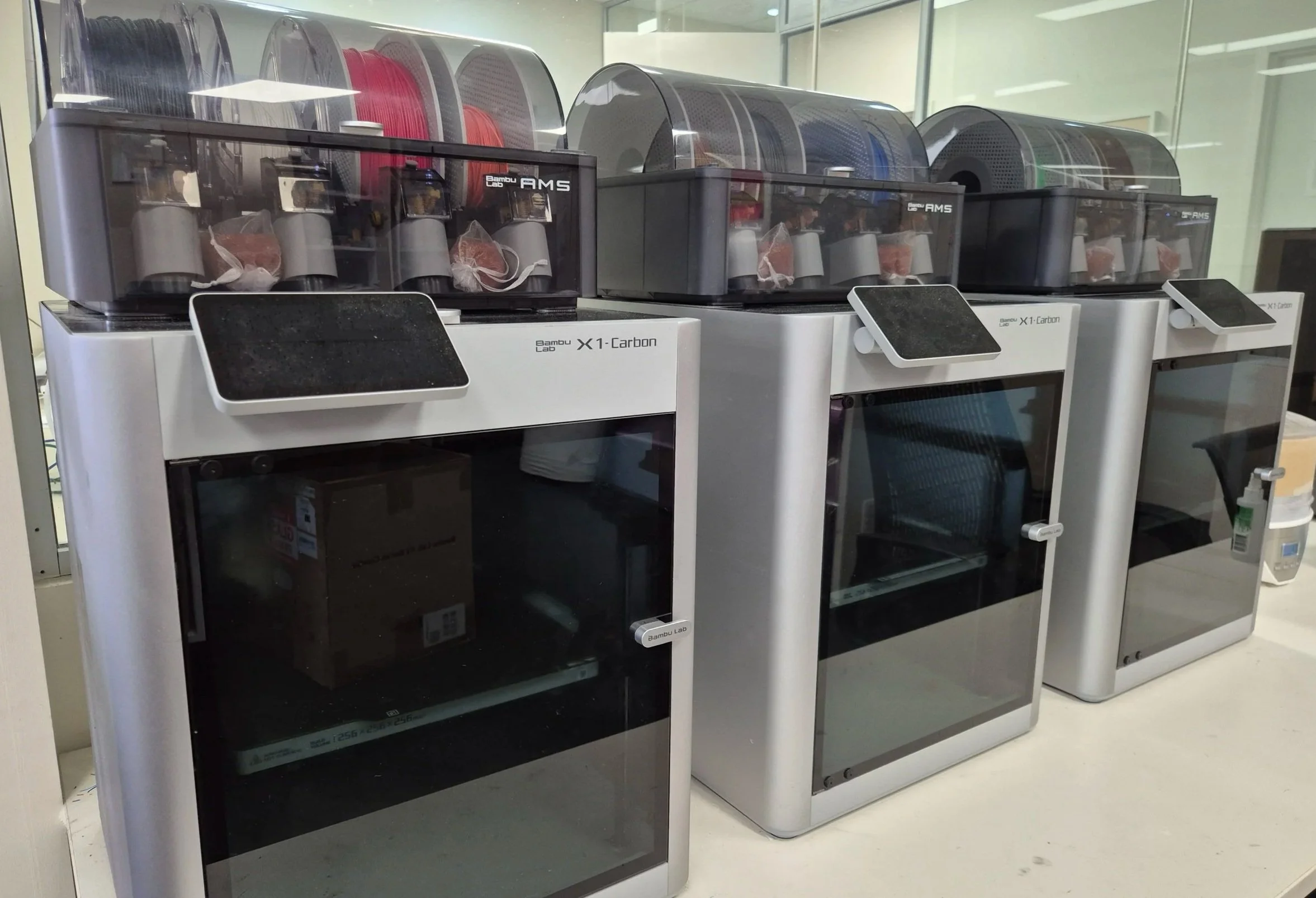
We operate five FDM plastic printers and two stereolithography (SLA /Resin printers with an accuracy of 0.01-0.2mm. These are used for prototyping, master patterns, moulds, fixtures, inserts and scale models.
3D Scanner
Our state-of-the-art high-resolution 3D scanner accurately 'maps' structures and objects into a 3D point cloud which can then translate into a 3D CAD model. This technology is used to accurately model existing structures that our new parts may need to marry to, ensuring an accurate fit.
Additionally, it can also be used at the conclusion of the part manufacture to digitally verify the part is accurate to the design and will fit as required prior to shipping as part of our Quality Control process.

Universal Testing Machine
Our advanced Universal Materials Testing Machine facilitates our testing services, reinforcing our commitment to the highest standards of testing, optimisation, integrity and traceability. Our Universal Testing Machine features:
Maximum force: 100 kN (10 tonnes) in tension and compression
Testing height: 1100 mm between crossheads
Testing width: 600 mm
Control modes: Displacement, force, strain, or combination
Data output: CSV format, graphs, or custom reports
Resin Infusion Machine
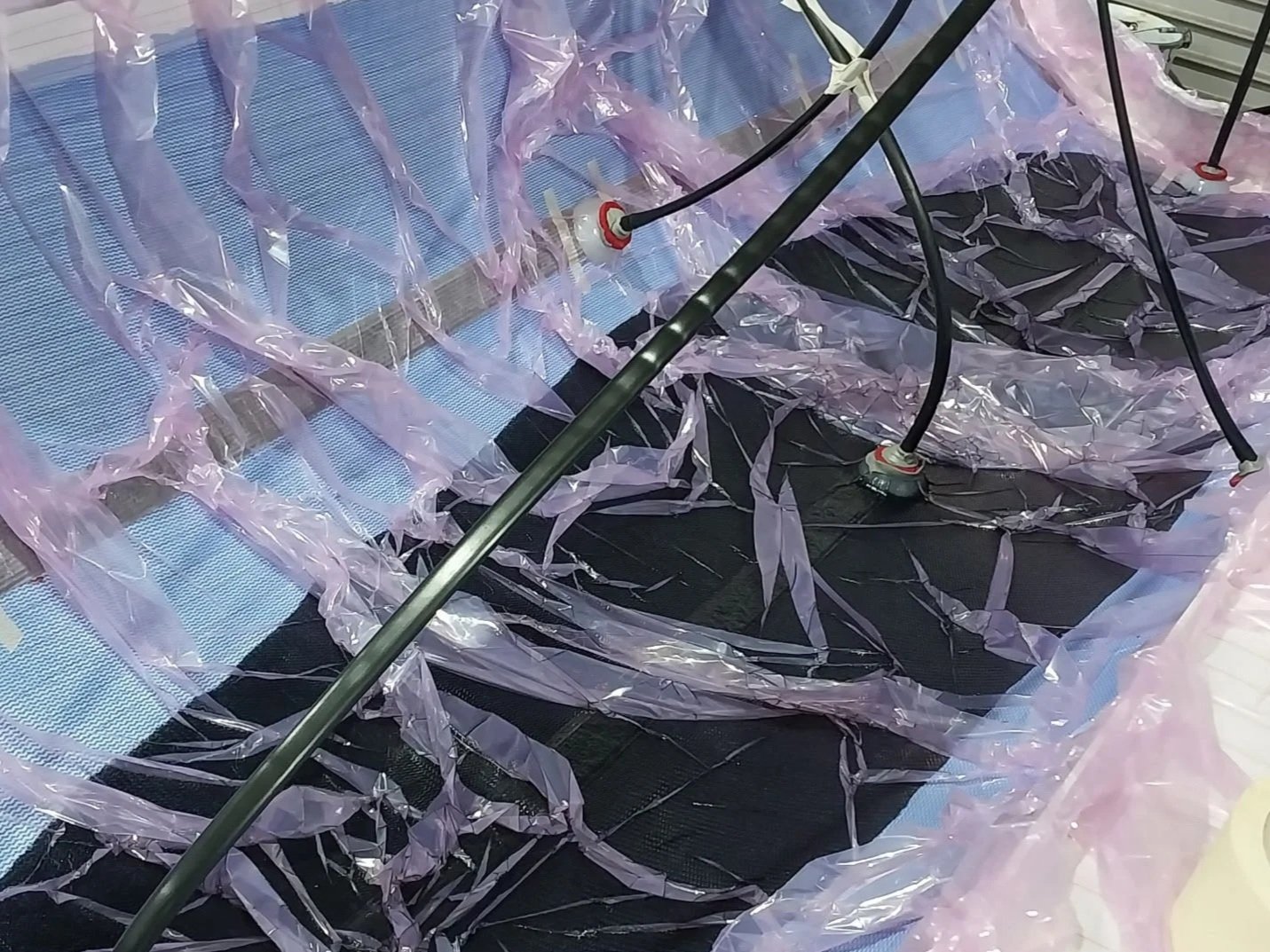
Composite Components' resin infusion machine delivers precision-controlled injections that minimise void content and resin waste, producing superior composite parts. This UK-manufactured system accommodates both polyester/vinylester and epoxy resins, with integrated in-mould thermocouple and pressure sensor capability. The advanced control system enables precise ramping speed and pressure regulation, with real-time sensors for accurate injection process monitoring.

Research and Development
Composite Components works with composite manufacturers and suppliers all over the world sourcing materials and equipment for experimental research and development projects, as well as short-run manufacturing purposes.
This knowledge and information are re-invested directly to satisfy the demands of our clients seeking the highest quality parts and the latest technology.
We subscribe to industry and trade magazines and attend exhibitions globally showcasing composites and their technologies, to bring the most up-to-date knowledge to our clients.